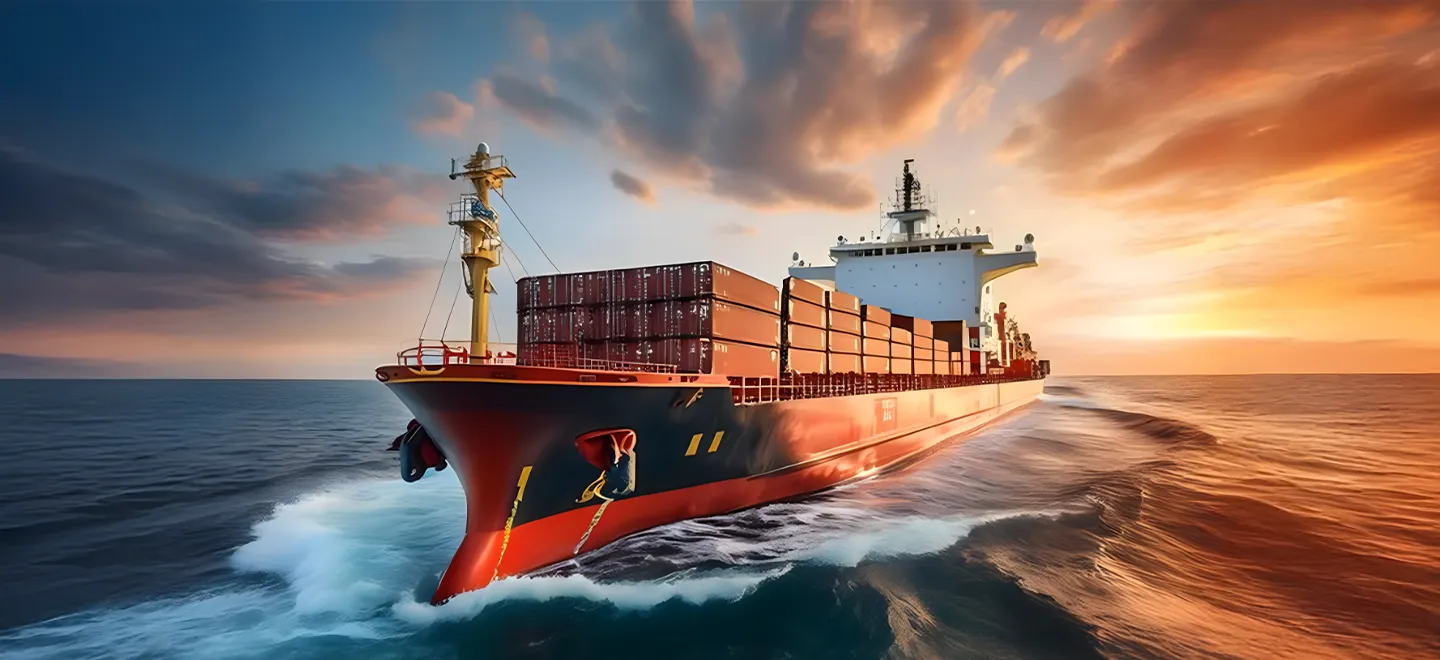
The Hidden Math behind Shipping to Africa
If you think shipping to Africa is “freight + customs”. Then wait until you meet the charges that show up only after your container has sailed.
Because the invoice you expect… is rarely the invoice you get.
The untold truth about Exporting
Every Indian exporter… Whether shipping tiles from Morbi or garments from Tirupur or machinery from Mumbai… has said this one line at least once:
“The freight looked okay… but where did the extra ₹80,000 come from?”
And yet, each time you check vessel schedules or book containers or dispatch goods, the same thing happens again:
- Your rates fluctuate
- Your timeline stretches
- Your landed cost increases
- Your margins shrink
There is a reason for it.
Actually, several reasons.
And most of them are not visible on the quote your forwarder sends.
Today, let’s break down the hidden math. The math behind shipping to Africa from India. The math nobody explained when you booked your first container.
This blog will let you know about that hidden math. Keep reading!
The Myth of “Africa is Nearby” (and why it fools exporters)
On the map, Africa sits right across the Arabian Sea.
It feels close.
It looks close.
But logistically?
Africa is one of the most complex shipping destinations.
While Europe runs smoothly. Digital customs, deep ports, predictable berthing. And Africa is a mix. Mix of:
- Markets growing at lightning speed
- Demand that never slows down
- India & Africa trade bonds deepening
- Ports that test your patience
- Automation yet to catch up
- Local fees that change overnight
This creates a pricing structure where distance has zero link to cost.
Exporters from India often compare:
- Rate to Dubai
- Rate to Antwerp
- Rate to Durban or Tema
…and ask:
“Why is Africa more expensive?”
The answer lies in the hidden layers.
Africa Freight Costs have Layers
Africa freight costs have layers but your invoice only shows one.
When you receive a freight quote… you mostly see one number:
Ocean Freight Africa – USD per container
But here’s the real equation behind that number:
Base freight
- Bunker adjustment
- Peak season surcharge
- Container imbalance Africa fees
- Congestion surcharge
- Port handling charges
- Documentation costs
- Local delivery + customs nuances
Now read that again.
Eight cost components…
…but exporters mostly see one.
This is exactly why Africa freight costs surprise first-time shippers.
Let’s open some of these up.
Ports decide your profit not the ocean
When exporters plan shipments, they think:
“The ship will take 20 days, the rate is fixed, the job is done.”
But the real thing begins when the vessel reaches Africa.
Some ports like Durban, Mombasa, Tema and Lagos are under constant pressure. Pressure of:
- Limited berths
- Manual handling
- Slow customs queues
- Heavy inland traffic
- Unpredictable strike cycles
- Equipment shortage
Result?
Containers wait.
And when containers wait, exporters pay.
This delay directly increases your:
- Demurrage
- Detention
- Warehousing
- Local delivery
- Clearing fees
And suddenly your “great” freight rate loses meaning.
This is why landed cost Africa often shocks SMEs. It includes many numbers beyond shipping.
General Rates vs Africa Reality
Every exporter has compared quotes and thought that “Europe is farther. Why is Africa costlier?”
Here’s why:
| Cost Component | Europe / Middle East | Africa |
|---|---|---|
| Tech-enabled ports | ✔️ | ❌ in many |
| Predictable handling fees | ✔️ | ❌ |
| Faster customs | ✔️ | ❌ |
| Digital documentation | ✔️ | ❌ |
| Congestion | Moderate | High |
| Inland infrastructure | Strong | Weak in some regions |
Africa is not costlier because it is far. Africa is costlier because it is complex.
More manual steps → More time
More time → More charges
More charges → More landed cost
Complexity = Cost.
Container Imbalance
This is the silent cost nobody mentions
This is the part exporters find most frustrating. More cargo leaves India than returns from Africa. This means empty containers must be repositioned.
Guess who pays for that reposition?
Not the shipping line. Not the African importer. You do.
This is what creates container imbalance Africa surcharges. Sometimes this alone adds $150-$400 per container.
Hidden Shipping Costs that hurt Indian Exporters the most
We have all had that moment when a forwarder sends “revised charges.”
Below are the real hidden shipping costs exporters rarely calculating upfront:
1. Extra handling fees in Africa
Some ports use more manual labor → higher charges. This is due to limited mechanization.
2. Congestion & berthing delays
Peak season delays = more demurrage + more detention.
3. Inland African movement
High fuel cost + bad roads + local checkpoints = very expensive local delivery.
4. Documentation lapses
Wrong COO or missing fumigation or delay in Form M? You will pay to correct it.
5. Currency fluctuations
Some African currencies fluctuate wildly → settlements shrink. This is what creates the “Why did the cost jump?” shock.
Landed Cost Africa
Why it is not your forwarder’s fault
Exporters often blame shipping lines or forwarders. But…
Your freight partner controls one part of your price. And Africa controls the rest.
Your landed cost depends heavily on:
- Local customs policies
- Port congestion cycles
- Hinterland logistics
- Tariff changes
- Vessel rerouting
- Market demand
Your forwarder cannot control customs queues. Be it in Lagos or vessel traffic in Mombasa. So, what you can control is your planning, timing, documentation and negotiation.
Real-life Math
How a Shipment becomes Costly
Let’s calculate.
You book a container to Tema at $1,600 ocean freight
But here’s what happens in real life:
- THC (India + Africa): $220
- Clearance + port fees: $150
- Container imbalance: $180
- Congestion surcharge: $100
- Demurrage: $90
- Trucking inside Ghana: $180
- Misc documentation: $30
And your real cost becomes $2,550. Exporters who do not calculate the “true” landed cost Africa often sell at thin margins and lose profitability.
How global politics changed the math
Red Sea disruptions, fuel increases and capacity shortages have forced vessels to take longer routes.
Longer route = higher fuel
Higher fuel = higher ocean freight
Longer transit = more congestion at arrival
More congestion = more hidden costs
This domino effect made Africa lanes unpredictable.
Exporters who understand this math survive. Those who don’t get bill shocks.
How exporters are solving this
Leading exporters now use ShipPulse Africa Shipping insights. Those are for:
- Better capacity prediction
- More accurate landed cost modelling
- Route comparison between East vs West Africa
- Avoiding congestion-heavy ports
- Consolidated planning
- Low-cost window identification
ShipPulse users have reduced cost overruns by:
- Choosing alternate ports
- Avoiding unnecessary rerouting
- Minimizing documentation delays
- Negotiating better with carriers
- Monitoring congestion cycles weekly
Smart exporters are not trying to control Africa. They are learning how to navigate it.
How you can save ₹₹₹ on Africa Shipments
Actionable Tips
Here’s the exact toolkit African exporters use:
1. Ship earlier than you think
Last-minute bookings cost more.
2. Avoid peak congestion windows
Ghana: September–December
Kenya & Tanzania: July–October
3. Split your risk
Use 2 shippers, not 1.
4. Track real congestion data
Not marketing flyers, actual port load charts.
5. Choose ports with better equipment
Durban, Port Said, Djibouti generally moves faster.
6. Calculate landed cost Africa before quoting buyers
Never finalize a PO based only on freight.
7. Pre-clear documents
Small paperwork errors cause the biggest losses.
In short
Africa is not expensive because it is far. Africa is expensive because it works differently.
Once you understand the hidden math… you ship smarter, you negotiate better and you protect your margins.
Your next profitable shipment does not depend on the distance. It depends on data, planning and smarter decisions.